


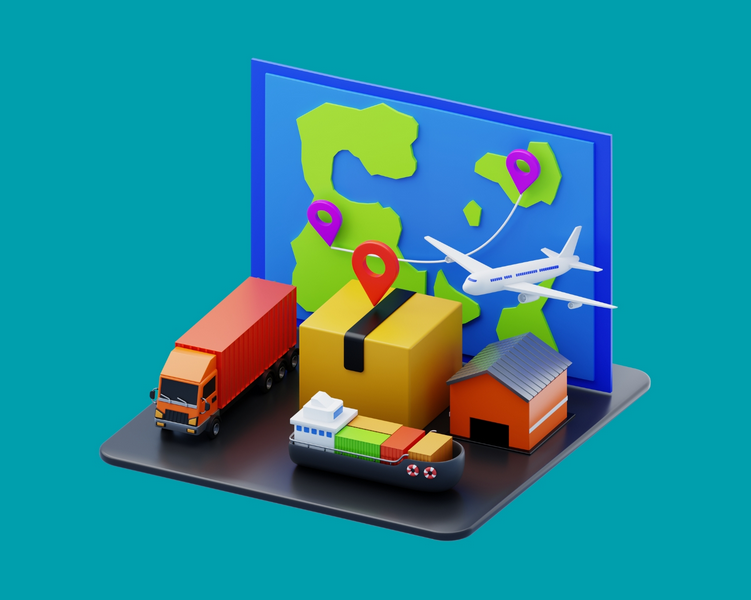
The logistics industry, integral to the global supply chain, has seen significant transformations in recent years, mainly driven by technological advancements. As the demand for faster, more efficient, and cost-effective services grows, logistics companies are turning to cutting-edge technologies to improve operations, enhance customer experiences, and stay competitive. Here’s how technology is revolutionizing the logistics industry.
1. Automation and Robotics
Automation is a game-changer for logistics companies, improving efficiency and reducing human error. Robots and automated systems are now used for tasks such as sorting, packing, and inventory management in warehouses. Automated guided vehicles (AGVs) and drones are being deployed to handle material transport within warehouses or to make deliveries to specific locations. These innovations reduce labor costs, speed up operations, and enhance accuracy in supply chain processes.
2. Internet of Things (IoT)
The Internet of Things (IoT) plays a critical role in modernizing logistics by connecting devices, sensors, and vehicles. With IoT-enabled tracking systems, logistics companies can monitor the location, condition, and status of goods in real-time. Sensors attached to shipments can provide data on temperature, humidity, and even shock, ensuring goods, especially perishable items, are transported safely. Real-time tracking enhances visibility, improves supply chain transparency, and boosts customer satisfaction by providing up-to-date delivery information.
3. Artificial Intelligence (AI) and Machine Learning
Artificial Intelligence (AI) and machine learning are revolutionizing route planning, demand forecasting, and predictive maintenance in logistics. AI-powered algorithms help logistics companies optimize delivery routes by analyzing traffic patterns, weather conditions, and road closures. This results in faster deliveries and reduced fuel consumption. Machine learning models also help businesses predict future demand, enabling better inventory management and reduced costs. Additionally, AI helps monitor vehicle condition, anticipating maintenance needs before they become critical issues, thereby reducing downtime.
4. Blockchain Technology
Blockchain technology is transforming the logistics industry by enhancing transaction transparency and security. Blockchain offers a decentralized, immutable ledger that can track every stage of a product’s journey in the supply chain. This ensures that all parties involved—manufacturers, distributors, and consumers—have access to the same information, reducing fraud and errors. By providing a transparent record of transactions, blockchain can also streamline processes such as customs clearance and invoicing.
5. E-Commerce Integration and Last-Mile Delivery
As e-commerce continues to grow, logistics companies are turning to technology to handle the increasing demand for last-mile delivery. Technologies such as crowdsourced delivery platforms and delivery robots are helping meet the demand for quick, cost-effective deliveries. Automated, data-driven delivery systems ensure the right products are delivered to customers on time, improving efficiency and customer satisfaction.
Conclusion
Technology is undeniably transforming the logistics industry, making it more efficient, cost-effective, and responsive to the demands of a fast-paced global economy. By embracing innovations such as automation, IoT, AI, blockchain, and advanced delivery systems, logistics companies can streamline operations and deliver better services to customers. The future of logistics is tech-driven, and businesses that adopt these technologies will be better equipped to thrive in a competitive marketplace.
#LogisticsTechnology #SupplyChainInnovation #AIinLogistics #Automation #IoT #Blockchain #EcommerceLogistics #LogisticsRevolution