Leverage is a key financial concept that significantly affects a company’s growth and profitability. In business terms, leverage refers to using borrowed capital (debt) to fund a company’s operations or expansion. Businesses can potentially increase their returns on investment by using leverage, but it also comes with risks. Understanding how…
In today’s fast-paced and competitive business environment, making informed decisions is crucial for success. Financial analysis is pivotal in helping businesses make these informed decisions by providing valuable insights into their financial health, performance, and prospects. Whether you are a small startup or an established enterprise, economic analysis helps you…
When evaluating a business’s financial health, liquidity and solvency are two crucial aspects to consider. Liquidity refers to a company’s ability to meet its short-term obligations, while solvency concerns its ability to meet long-term obligations. These measures are essential for assessing a company’s financial stability and risk. Understanding how to…
Understanding a company’s profitability is essential for investors, business owners, and financial analysts. Profitability analysis helps determine whether a company generates sufficient profit relative to its revenues, assets, and equity. Stakeholders can assess the company’s financial health, efficiency, and long-term sustainability by evaluating key financial ratios and performance indicators. This…
The income statement, also known as the profit and loss (P&L) statement, is a crucial financial document that provides insights into a company’s revenues, expenses, and profitability over a specific period. Investors, business owners, and financial analysts use this statement to assess a company’s financial performance, operational efficiency, and growth…
As cities grow larger and denser, the demand for efficient and sustainable urban logistics has never been higher. With e-commerce booming, consumer expectations for fast and reliable deliveries are higher than ever. At the same time, urban logistics faces unique challenges, including traffic congestion, environmental concerns, and limited delivery infrastructure.…
Logistics plays a critical role in the pharmaceutical industry, ensuring that life-saving drugs and medical supplies reach healthcare providers, pharmacies, and patients in a timely, efficient, and safe manner. The complexity of the pharmaceutical supply chain—combined with the high standards required for product safety and compliance—makes logistics one of the…
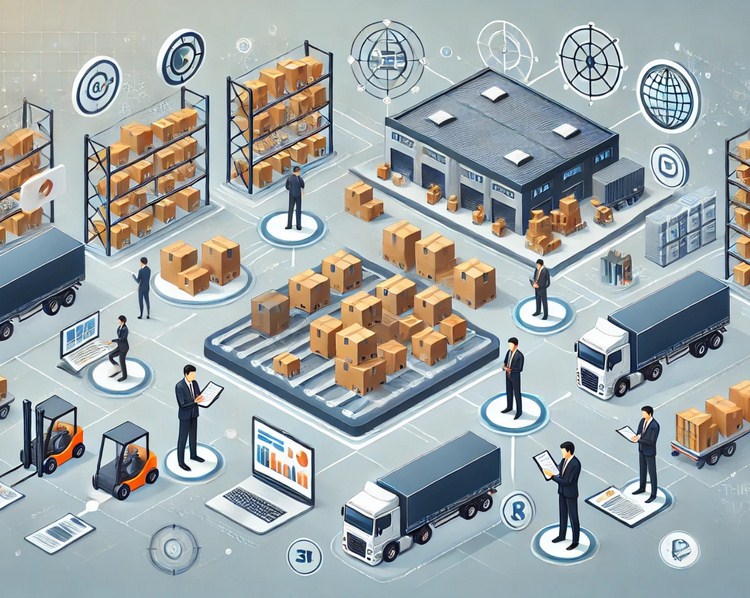
Efficient logistics are the backbone of any successful business, ensuring products move smoothly from production to the end customer. Managing logistics in-house can be costly and time-consuming for many companies and small and medium-sized enterprises (SMEs). Outsourcing logistics operations provides a practical solution, allowing companies to focus on their core…
Effective supply chain management is crucial for businesses to stay competitive and meet customer expectations. Visibility is vital, enhancing operational efficiency, reducing costs, and providing better customer service. 1. Implement Real-Time Tracking Systems The foundation of supply chain visibility is real-time data. Implementing tracking systems that allow you to monitor…
Partnering with the proper third-party logistics (3PL) provider can streamline your supply chain, improve customer satisfaction, and allow your business to focus on core activities. However, not all 3PL providers offer the same services or expertise. Choosing the right partner requires evaluating specific factors to ensure they align with your…