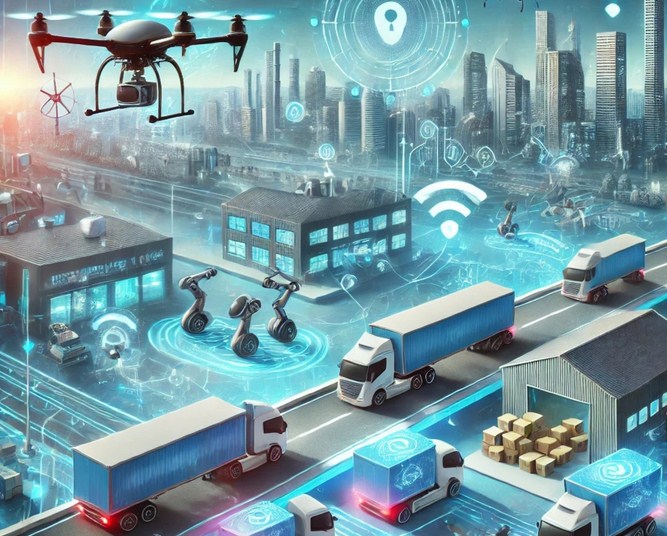
Autonomous vehicles (AVs) are poised to transform the logistics industry by enhancing efficiency, reducing costs, and addressing challenges like driver shortages and delivery delays. As technology advances, AVs—from self-driving trucks to delivery drones—are becoming a realistic solution for businesses seeking to optimize their supply chains. Here’s how autonomous vehicles will revolutionize logistics and reshape the industry’s future.
1. Improving Efficiency and Reducing Costs
Autonomous vehicles offer unparalleled efficiency by eliminating human error and operating continuously without the need for breaks. Self-driving trucks can travel long distances without stopping, reducing delivery times and fuel consumption. These vehicles use advanced algorithms to determine optimal routes, further enhancing efficiency.
Example: Companies like Waymo and Tesla are developing autonomous trucks capable of handling long-haul routes, minimizing downtime, and increasing the volume of goods transported.
Impact: Lower operational costs and faster deliveries benefit businesses and consumers, making logistics more cost-effective and reliable.
2. Addressing Labor Shortages
The logistics industry faces significant driver shortages, with demand for qualified drivers often outstripping supply. Autonomous vehicles can help bridge this gap by taking over routine and long-haul routes, freeing human drivers to focus on tasks that require more flexibility and decision-making.
Example: Self-driving trucks can manage repetitive routes, allowing drivers to concentrate on short-haul or urban deliveries where human input is still essential.
Impact: By alleviating labor shortages, AVs ensure supply chains remain operational and efficient, even during peak demand.
3. Enhancing Safety and Reducing Accidents
Human error is a leading cause of road accidents, many of which involve commercial vehicles. Autonomous vehicles are equipped with advanced sensors, cameras, and AI-driven systems that enable them to detect obstacles, respond to changing road conditions, and adhere to traffic laws more consistently than human drivers.
Example: Autonomous delivery vans equipped with lidar and radar systems can navigate complex urban environments safely, reducing the risk of accidents.
Impact: Improved safety translates into fewer delays, reduced liability costs, and enhanced public trust in logistics operations.
4. Revolutionizing Last-Mile Delivery
Last-mile delivery, the final leg of the logistics journey, is often the most expensive and time-consuming part of the process. Autonomous vehicles like drones and small delivery robots can streamline last-mile logistics, ensuring faster and more cost-effective deliveries.
Example: Companies like Amazon and FedEx pilot drone delivery programs to transport packages directly to customers’ doorsteps.
Impact: Faster, autonomous last-mile solutions improve customer satisfaction and reduce operational complexities.
Conclusion
Autonomous vehicles have the potential to revolutionize logistics by improving efficiency, addressing labor shortages, enhancing safety, and optimizing last-mile delivery. As technology advances, integrating AVs into logistics operations will become a game-changer for businesses seeking to remain competitive in an evolving market. The future of logistics is autonomous, and the possibilities are endless.
#AutonomousVehicles #LogisticsInnovation #FutureOfLogistics #SelfDrivingTrucks #DeliveryDrones #SupplyChainEfficiency #LastMileDelivery #SmartLogistics #AVTechnology #LogisticsRevolution